
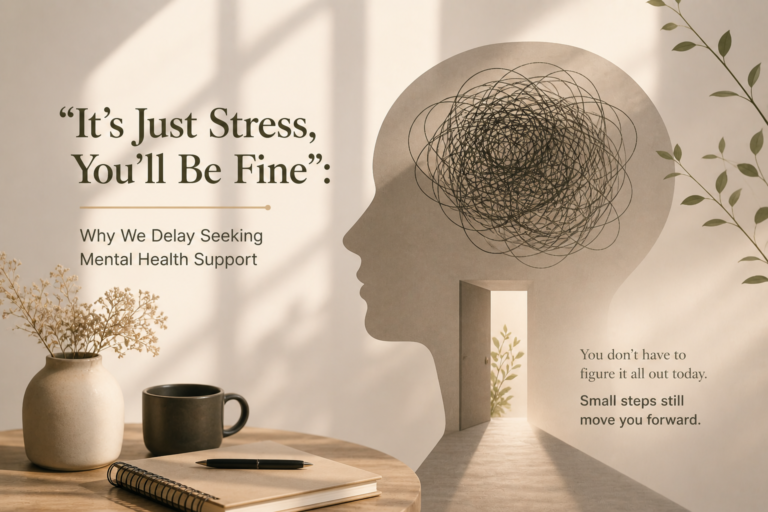
Many people who eventually seek help for their mental health say something similar:
“I’ve been feeling this way for a long time… I just thought it would pass.”
And often, when they first spoke about it, they heard:
“It’s just stress.”
“Everyone goes through this.”
“Don’t overthink it.”
Over time, these responses can make it harder to recognise when something truly needs attention.
When Struggles Get Normalised
Unlike physical health, where symptoms are easier to identify, emotional distress is often subtle.
Constant overthinking, anxiety, low mood, irritability, or feeling disconnected may slowly become part of daily life. Because these changes happen gradually, they are often seen as:
- Personality traits
- Temporary stress
- Something to “push through”
Even family members and well-wishers may minimise it – not out of neglect, but because they may not fully understand it themselves.

It’s Not “Just in the Mind”
Mental health concerns are not simply about willpower or attitude.
Our brain and body are actively involved. Changes in brain chemicals, stress hormones, and sleep patterns can affect how we think, feel, and respond. When stress becomes prolonged, the nervous system can remain in a heightened or exhausted state, making it harder to relax, concentrate, or feel emotionally balanced.
Just like a fever makes the body feel weak and signals that something needs care, ongoing anxiety, low mood, or constant overthinking are signals from the brain and body – not signs of personal weakness.
Understanding this can help shift the question from
“Why can’t I handle this?”
to
“What might my mind and body be going through right now?”
“I Should Be Able to Handle This”
Many people hesitate to seek help because of an internal belief:
“I used to be strong. I should be able to manage this.”
This can lead to:
- Delaying conversations about how they feel
- Comparing their struggles with others
- Waiting for things to get “bad enough”
But mental health doesn’t need to reach a crisis point to deserve care.
The Fear and Stigma Around Seeking Help
There is still hesitation around reaching out to a mental health professional.
People may worry:
- “What will others think?”
- “Does this mean something is seriously wrong?”
- “Am I overreacting?”
Because of this, many continue to cope silently, even when it feels overwhelming.
When Functioning Hides the Struggle
One of the most common reasons for delay is this:
“I’m still managing… so maybe it’s not that serious.”
People continue working, meeting responsibilities, and showing up. But internally, they may feel exhausted, stuck, or disconnected.
Functioning does not always mean feeling well.
Why Early Support Matters
When emotional difficulties are addressed early, they are often easier to understand and work through.
Waiting too long can make patterns more deeply ingrained – whether it’s anxiety, overthinking, avoidance, or emotional exhaustion.
Just like we don’t ignore a persistent physical symptom, our emotional well-being also deserves timely care.
A Gentle Shift
Seeking help is not about being unable to cope – it’s about recognising when you don’t have to cope alone.
Book your consultation Now: WhatsApp Now